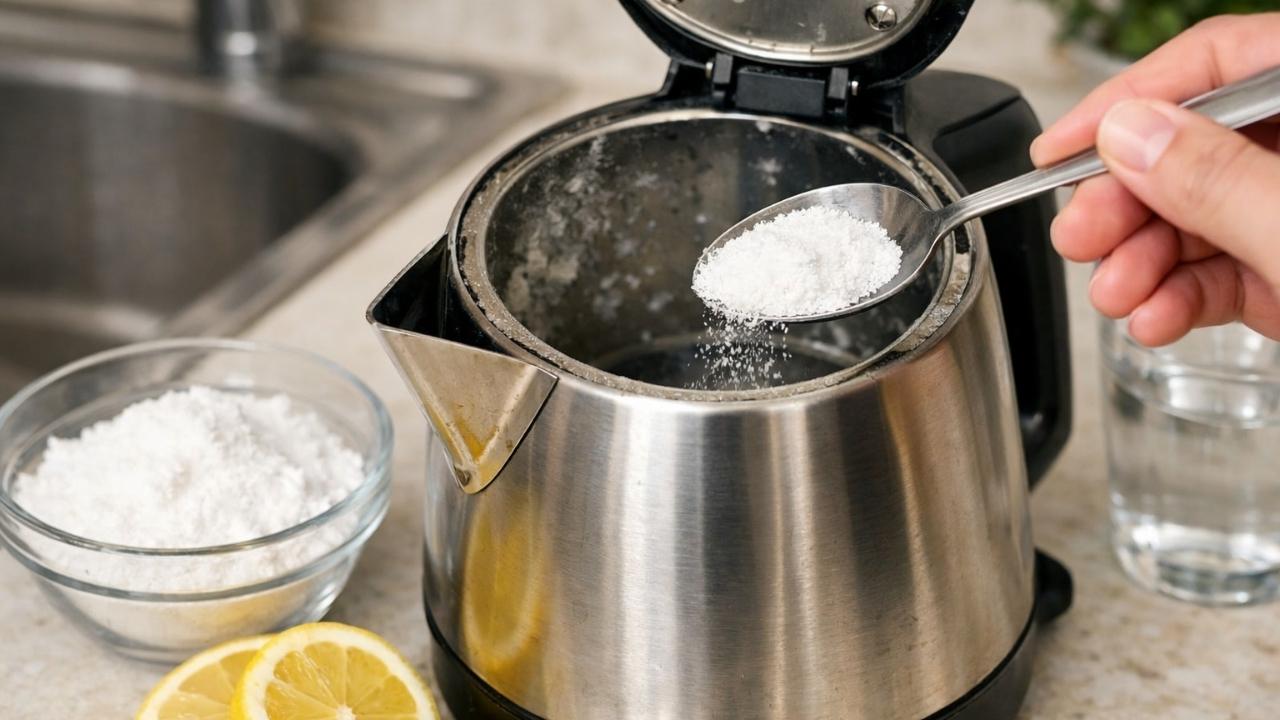
Simple Trick to Remove Limescale from Kettles: Limescale buildup in kettles is a common problem, especially in areas with hard water. Over time, the mineral deposits form a chalky layer inside the kettle, affecting both its appearance and performance. Many people turn to vinegar or soap to clean it, but these methods can leave behind strong odors or residues. Fortunately, there is a simple natural trick that removes limescale effectively without vinegar or soap, leaving your kettle fresh and safe to use.
Why Limescale Forms
Limescale is primarily composed of calcium carbonate, which accumulates when water is heated. As the water evaporates, minerals remain and harden into a crust. This buildup not only looks unpleasant but can also slow down boiling, reduce efficiency, and even shorten the lifespan of your kettle. Regular cleaning is essential to prevent these issues.

The Lemon Water Method
One of the easiest ways to remove limescale naturally is by using lemon water. Lemons contain citric acid, which dissolves mineral deposits without leaving behind strong odors. To use this method, fill the kettle halfway with water and add the juice of one or two fresh lemons. Bring the mixture to a boil, then let it sit for about 30 minutes. Afterward, rinse thoroughly with clean water. The limescale loosens and washes away, leaving the kettle shiny and fresh.
Baking Soda Boost
For stubborn limescale, baking soda can be added to the lemon water solution. Baking soda enhances the cleaning power by softening deposits and neutralizing odors. Simply add one tablespoon of baking soda to the lemon water before boiling. This combination works quickly and safely, ensuring that no chemical residue remains.

Boiling Method with Fresh Water
Another trick involves boiling plain water multiple times to loosen limescale naturally. Fill the kettle with water, bring it to a boil, and then discard it. Repeating this process several times helps soften the deposits, making them easier to wipe away. While this method may take longer, it avoids the use of vinegar or soap entirely.
Gentle Scrubbing with a Cloth
After using lemon water or repeated boiling, any remaining limescale can be removed with a soft cloth or sponge. Avoid using abrasive scrubbers, as they may scratch the kettle’s surface. A gentle wipe is usually enough to clear away softened deposits, leaving the interior smooth and clean.

Preventing Future Buildup
Prevention is just as important as cleaning. Using filtered water reduces mineral content, slowing down limescale formation. Emptying the kettle after each use also prevents deposits from settling. Regular monthly cleaning with lemon water ensures that limescale never becomes a major problem.
Benefits of Natural Cleaning
Natural methods like lemon water and baking soda are safe, effective, and eco-friendly. They avoid harsh chemicals, protect the kettle’s surface, and leave no unpleasant aftertaste. These tricks are inexpensive and easy to perform, making them ideal for everyday household care.

Conclusion
Removing limescale from kettles does not require vinegar or soap. With simple tricks like lemon water, baking soda, repeated boiling, and gentle scrubbing, you can keep your kettle clean and efficient. These natural methods are safe, affordable, and effective, ensuring that your kettle remains in top condition. By adopting regular maintenance, you can enjoy fresh-tasting hot drinks and extend the life of your appliance without relying on harsh solutions.