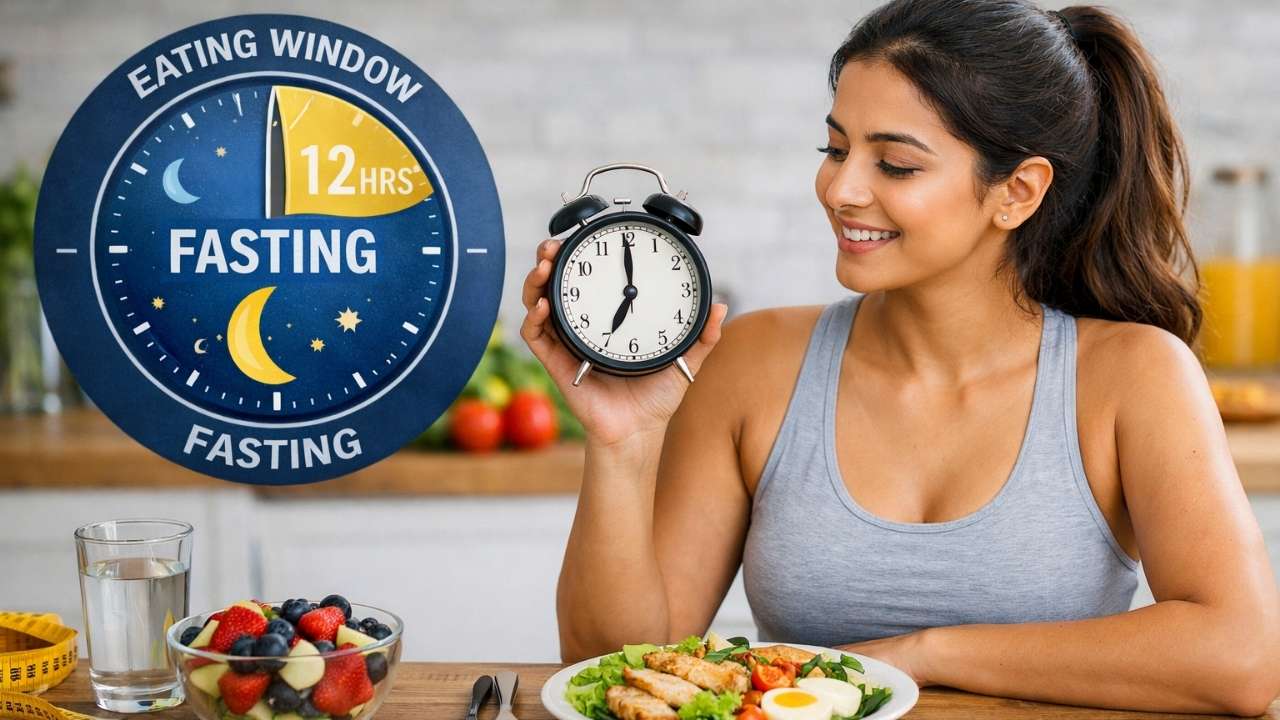
12-Hour Intermittent Fasting Plan: Intermittent fasting has become a popular approach to fat loss and overall health. While many fasting protocols exist, the 12-hour plan is one of the most sustainable and beginner-friendly options, especially for women. Unlike more restrictive fasting schedules, the 12-hour method balances fat-burning benefits with hormonal health, energy stability, and long-term adherence. This guide explores how women can use a 12-hour intermittent fasting plan to achieve fat loss and body transformation over 12 weeks.
Understanding the 12-Hour Fast
The 12-hour intermittent fasting plan involves fasting for 12 hours and eating within a 12-hour window. For example, if the eating window is from 7 a.m. to 7 p.m., the fasting period runs from 7 p.m. to 7 a.m. This schedule aligns naturally with circadian rhythms, making it easier to follow. It allows the body to enter a mild fasting state overnight, promoting fat utilization without extreme restriction.

Why the 12-Hour Plan Works for Women
Women often face unique challenges with fasting due to hormonal fluctuations. Longer fasting windows can sometimes disrupt menstrual cycles or energy levels. The 12-hour plan is gentle yet effective, supporting fat loss while maintaining hormonal balance. It provides enough fasting time to trigger metabolic benefits without pushing the body into stress.
Benefits of the 12-Hour Fasting Plan
- Promotes fat loss by encouraging the body to use stored energy
- Supports metabolic health and insulin sensitivity
- Reduces late-night snacking and calorie overconsumption
- Improves digestion and gut health
- Enhances energy and focus during the day
- Sustainable and adaptable to different lifestyles
Structuring the Eating Window
The eating window should focus on nutrient-dense foods. Meals should include lean proteins, healthy fats, complex carbohydrates, and plenty of vegetables. Spacing meals evenly throughout the day prevents energy crashes. For example, breakfast at 7 a.m., lunch at 12 p.m., and dinner at 6:30 p.m. fits well within the 12-hour window.

Nutrition Guidelines
Protein intake is crucial for fat loss and muscle preservation. Women should aim for 1.6 to 2 grams of protein per kilogram of body weight daily. Healthy fats from sources like avocado, nuts, and olive oil support hormonal health. Complex carbohydrates such as oats, quinoa, and sweet potatoes provide sustained energy. Hydration is equally important, with water and herbal teas being ideal choices during fasting hours.
Exercise and Fasting
Combining intermittent fasting with exercise enhances fat loss. Strength training builds lean muscle, which increases metabolism. Cardio supports calorie expenditure and cardiovascular health. Women can train during the eating window or toward the end of the fasting period, depending on energy levels. Listening to the body ensures workouts remain effective and safe.

Week 1 to 4: Establishing the Routine
The first month focuses on consistency. Women should gradually adjust meal times to fit the 12-hour window. Nutrition should emphasize whole foods and balanced macros. Exercise routines should include two to three strength sessions and one to two cardio sessions weekly. The goal is to build habits without overwhelming the body.
Week 5 to 8: Enhancing Fat Loss
During the second phase, the body adapts to fasting. Women may notice reduced cravings and improved energy. Training intensity can increase, with progressive overload in strength workouts. Nutrition should remain consistent, with attention to portion control. This phase often brings visible changes in body composition.

Week 9 to 12: Refining and Sustaining
The final phase focuses on refining habits and sustaining progress. Women should continue with structured workouts and balanced nutrition. Adjustments can be made based on progress, such as slightly reducing calorie intake or increasing cardio. By week 12, fat loss results are typically noticeable, along with improved strength and confidence.
Common Mistakes to Avoid
Several mistakes can hinder progress. These include undereating, overcompensating during the eating window, neglecting protein, and skipping recovery. Another common error is expecting rapid results. Fat loss is gradual, and patience is essential. Avoiding extremes ensures sustainable progress.

Mental and Emotional Benefits
Beyond physical transformation, intermittent fasting supports mental clarity and emotional resilience. Women often report improved focus, reduced stress eating, and greater control over food choices. The structured routine fosters discipline and confidence, extending benefits beyond fat loss.
Long-Term Sustainability
The 12-hour fasting plan is sustainable because it aligns with natural eating patterns. Unlike restrictive diets, it does not eliminate food groups or require extreme measures. Women can continue using the plan beyond 12 weeks, adjusting meal timing to fit lifestyle changes. Sustainability ensures lasting results.

Conclusion
The 12-hour intermittent fasting plan offers women a balanced approach to fat loss, health, and confidence. Over 12 weeks, it builds habits that reshape the body and mind. By combining structured nutrition, consistent exercise, and mindful recovery, women can achieve lasting transformation. The journey is not about deprivation but about empowerment, creating a lifestyle that supports strength, vitality, and long-term well-being.