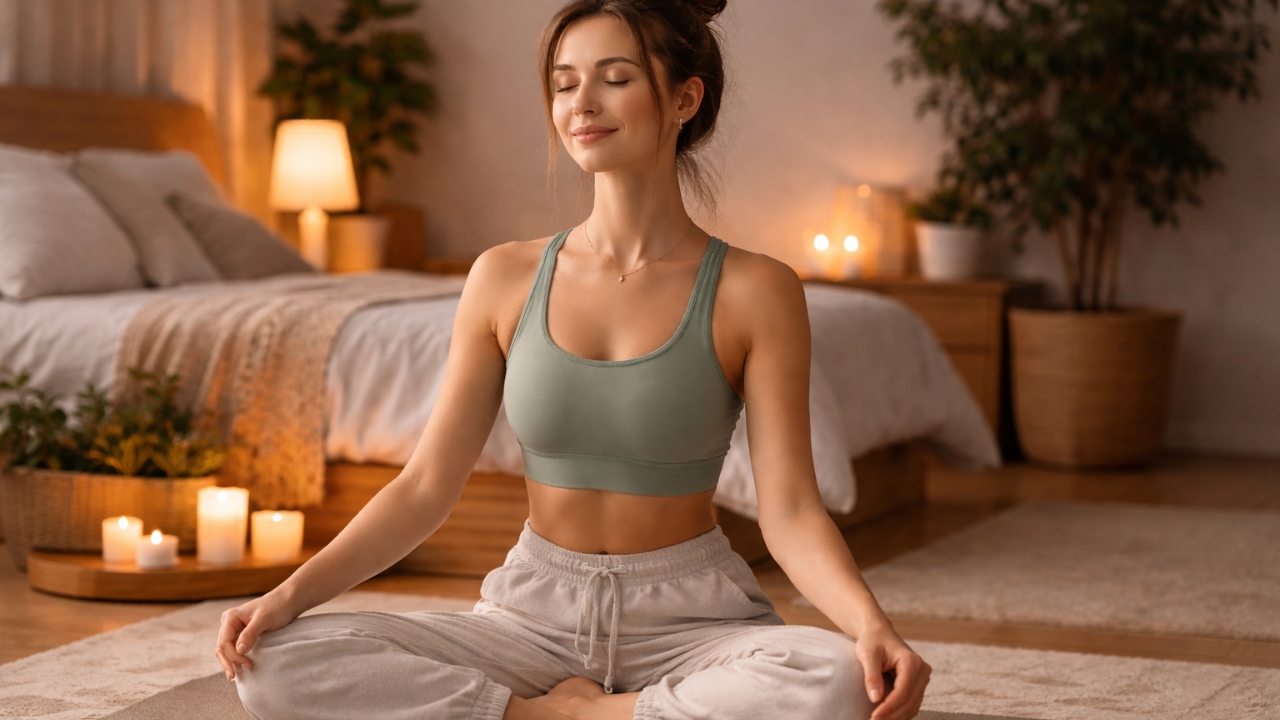
Gentle Yoga Poses for Better Sleep: Sleep is one of the most important pillars of health, yet many people struggle to unwind at night. Gentle yoga offers a natural way to prepare the body and mind for rest. Unlike vigorous exercise, these poses calm the nervous system, release tension, and encourage relaxation. Practicing them before bedtime can help you drift into deeper, more restorative sleep. Here are three simple yoga poses that anyone can try, along with guidance on how they support better rest.
The Forward Fold for Calming the Mind
The forward fold is a gentle posture that encourages the body to let go of stress. By folding forward, you create a sense of surrender that quiets the mind. This pose stretches the hamstrings and lower back while promoting relaxation in the nervous system. To practice, sit on the floor with your legs extended straight in front of you. Slowly bend forward from the hips, reaching toward your feet. Rest your hands wherever they naturally fall and allow your head to hang. Focus on slow breathing, inhaling deeply and exhaling fully. Holding this pose for one to two minutes helps release mental tension and prepares the body for sleep.

The Reclined Bound Angle for Deep Relaxation
The reclined bound angle pose is one of the most soothing positions for bedtime. It opens the hips and chest while encouraging the body to relax completely. To practice, lie on your back and bring the soles of your feet together, allowing your knees to fall outward. Place pillows under your knees for support if needed. Rest your arms comfortably at your sides and close your eyes. This pose promotes gentle release in the hips and calms the parasympathetic nervous system, which is responsible for rest and digestion. Holding the pose for five to ten minutes while focusing on slow breathing can create a deep sense of peace, making it easier to fall asleep.
The Legs Up the Wall for Stress Relief
Legs up the wall is a restorative pose that reduces stress and improves circulation. It is especially helpful for people who spend long hours standing or sitting during the day. To practice, sit close to a wall and lie back, swinging your legs upward until they rest against the wall. Your body should form an L shape, with your back flat on the floor and legs extended vertically. Place a pillow under your hips for comfort if desired. Close your eyes and breathe slowly, allowing tension to melt away. This pose helps regulate blood flow, reduces swelling in the legs, and calms the nervous system. Holding it for five to fifteen minutes can leave you feeling refreshed and ready for sleep.

How These Poses Work Together
Each of these poses targets relaxation in a different way. The forward fold quiets the mind, the reclined bound angle opens the body, and legs up the wall relieves physical stress. Practicing them in sequence creates a complete bedtime routine that addresses both mental and physical tension. Together, they prepare the body for rest and encourage deeper sleep cycles. The beauty of gentle yoga is that it requires no equipment and can be adapted for any fitness level. Even a few minutes of practice can make a noticeable difference in how easily you fall asleep.
Breathing as the Key to Relaxation
While the poses themselves are powerful, the breath is what truly unlocks their benefits. Slow, steady breathing signals the body to relax. Inhale through the nose, allowing the belly to rise, and exhale fully, letting the belly fall. This rhythm calms the nervous system and enhances the effects of each pose. Combining mindful breathing with gentle yoga creates a powerful tool for better sleep.

Creating a Bedtime Yoga Ritual
Consistency is important when using yoga for sleep. Creating a bedtime ritual helps train the body to associate these poses with rest. Choose a quiet space, dim the lights, and practice the three poses in sequence. Allow yourself at least fifteen minutes to move through them slowly. Over time, this ritual becomes a signal to the body that it is time to unwind. The routine not only improves sleep but also reduces stress and promotes overall well-being.
Listening to Your Body
Yoga is not about pushing limits but about tuning into your body’s needs. If a pose feels uncomfortable, adjust it with pillows or blankets. The goal is relaxation, not intensity. Seniors, beginners, and those with physical limitations can modify each pose to suit their comfort. By listening to your body, you ensure that the practice remains gentle and supportive.

The Connection Between Yoga and Sleep Quality
Research shows that yoga can improve sleep quality by reducing stress hormones and calming the nervous system. Gentle poses practiced before bedtime help lower heart rate, ease muscle tension, and quiet the mind. This creates the ideal conditions for restorative sleep. Unlike medication, yoga works naturally with the body, offering long-term benefits without side effects. Many people find that regular practice not only improves sleep but also enhances energy and mood during the day.
Conclusion
Gentle yoga is a simple yet powerful way to prepare for sleep. The forward fold, reclined bound angle, and legs up the wall are three natural poses that promote relaxation, reduce stress, and encourage deeper rest. Practicing them regularly as part of a bedtime ritual can transform the way you sleep. By combining mindful breathing with gentle movement, you create a pathway to peace and renewal. Sleep becomes not just a necessity but a nourishing experience that supports health and happiness.