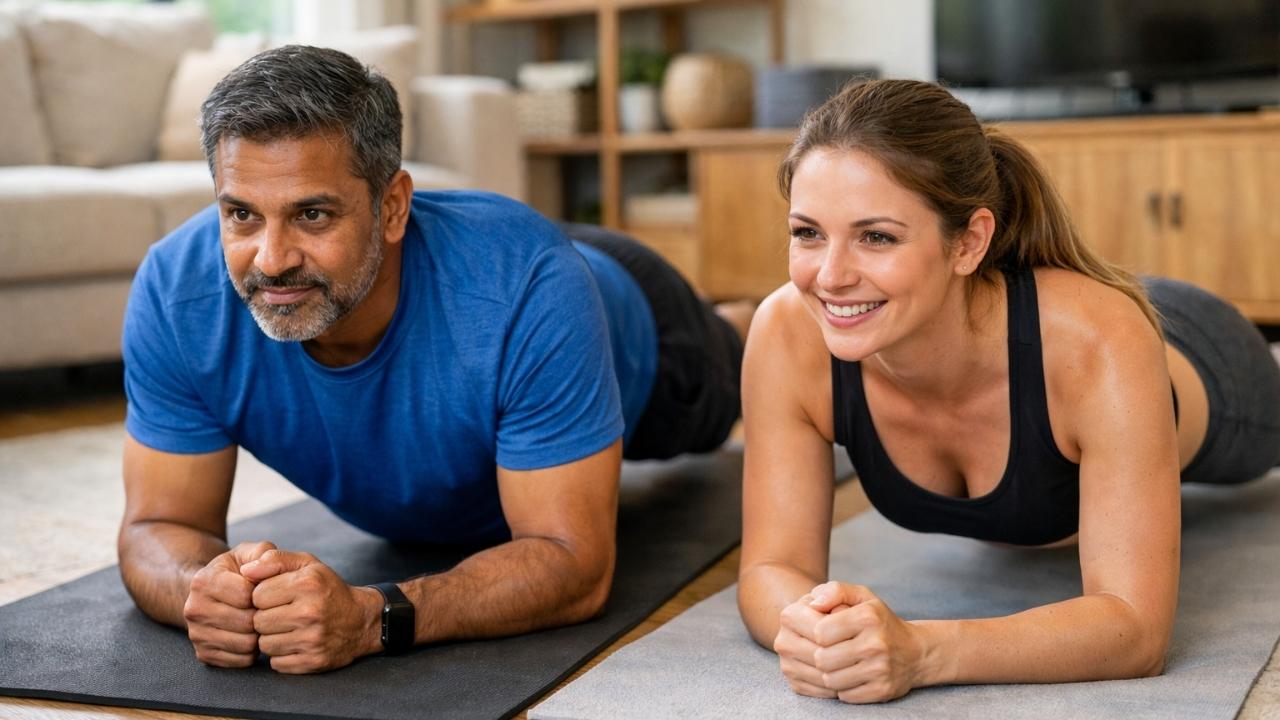
Plank Hold Timing: Planks are one of the most effective exercises for building core strength. Unlike sit-ups or crunches, they engage multiple muscle groups at once, including the abdominals, back, shoulders, and glutes. A strong core improves posture, balance, and stability, which are essential for everyday movements and overall fitness.
The Ideal Starting Point
For beginners of any age, holding a plank for 10 to 20 seconds is a safe and effective starting point. This allows the body to adjust to the position without straining muscles. The focus should be on maintaining proper form rather than pushing for longer times.

Building Endurance Gradually
Once comfortable with shorter holds, gradually increase the duration. Aim for 30 seconds, then 45 seconds, and eventually one minute. Incremental progress ensures that muscles strengthen without risk of injury. Consistency is more important than duration, so practicing daily or several times a week yields the best results.
Plank Timing for Adults Under 40
Adults under 40 often have greater muscle endurance and can aim for longer holds. A target of 60 to 90 seconds is realistic for those who exercise regularly. For advanced fitness levels, holding planks for two minutes can provide an extra challenge, but only if form remains correct.

Plank Timing for Adults Between 40 and 60
In this age group, core strength remains vital for maintaining mobility and preventing back pain. Holding planks for 30 to 60 seconds is generally recommended. Focus on quality over quantity, ensuring the spine stays aligned and the core engaged throughout the hold.
Plank Timing for Adults Over 60
For older adults, planks are still highly beneficial but should be approached with caution. Start with 10 to 20 seconds and gradually build up to 30 seconds. Wall planks or knee-supported planks are excellent modifications that reduce strain while still strengthening the core.

Signs You Are Holding Too Long
Holding a plank beyond your capacity can lead to poor form and potential injury. Warning signs include sagging hips, arching the back, or holding your breath. If these occur, it is better to stop and rest rather than push through. Proper alignment is more important than duration.
Variations to Keep It Interesting
Different plank variations can challenge the core without requiring longer holds. Side planks strengthen obliques, while forearm planks reduce wrist strain. Adding small movements, such as shoulder taps or leg lifts, increases intensity and keeps workouts engaging.

Tips for Success
- Always engage the core by pulling the belly button toward the spine.
- Keep the body in a straight line from head to heels.
- Breathe steadily throughout the hold.
- Practice regularly, aiming for gradual improvement.
- Combine planks with other core exercises for balanced strength.
The Bigger Picture
Plank hold timing is not about achieving the longest duration but about building strength safely and effectively. Whether you are 20 or 70, planks can be adapted to suit your fitness level. By focusing on proper form and gradual progress, this simple exercise becomes a powerful tool for maintaining core strength at any age.